

Palo Alto Networks has disclosed that threat actors may have attempted to unsuccessfully exploit a recently disclosed critical security flaw as early as April 9, 2026. The vulnerability in question is CVE-2026-0300 (CVSS score: 9.3/8.7), a buffer overflow vulnerability in the User-ID Authentication Portal service of Palo Alto Networks PAN-OS software that could allow an unauthenticated attacker
Read More
Cybersecurity researchers have discovered three packages on the Python Package Index (PyPI) repository that are designed to stealthily deliver a previously unknown malware family called ZiChatBot on Windows and Linux systems. “While these wheel packages do implement the features described on their PyPI web pages, their true purpose is to covertly deliver malicious files,” Kaspersky said. “Unlike traditional
Read More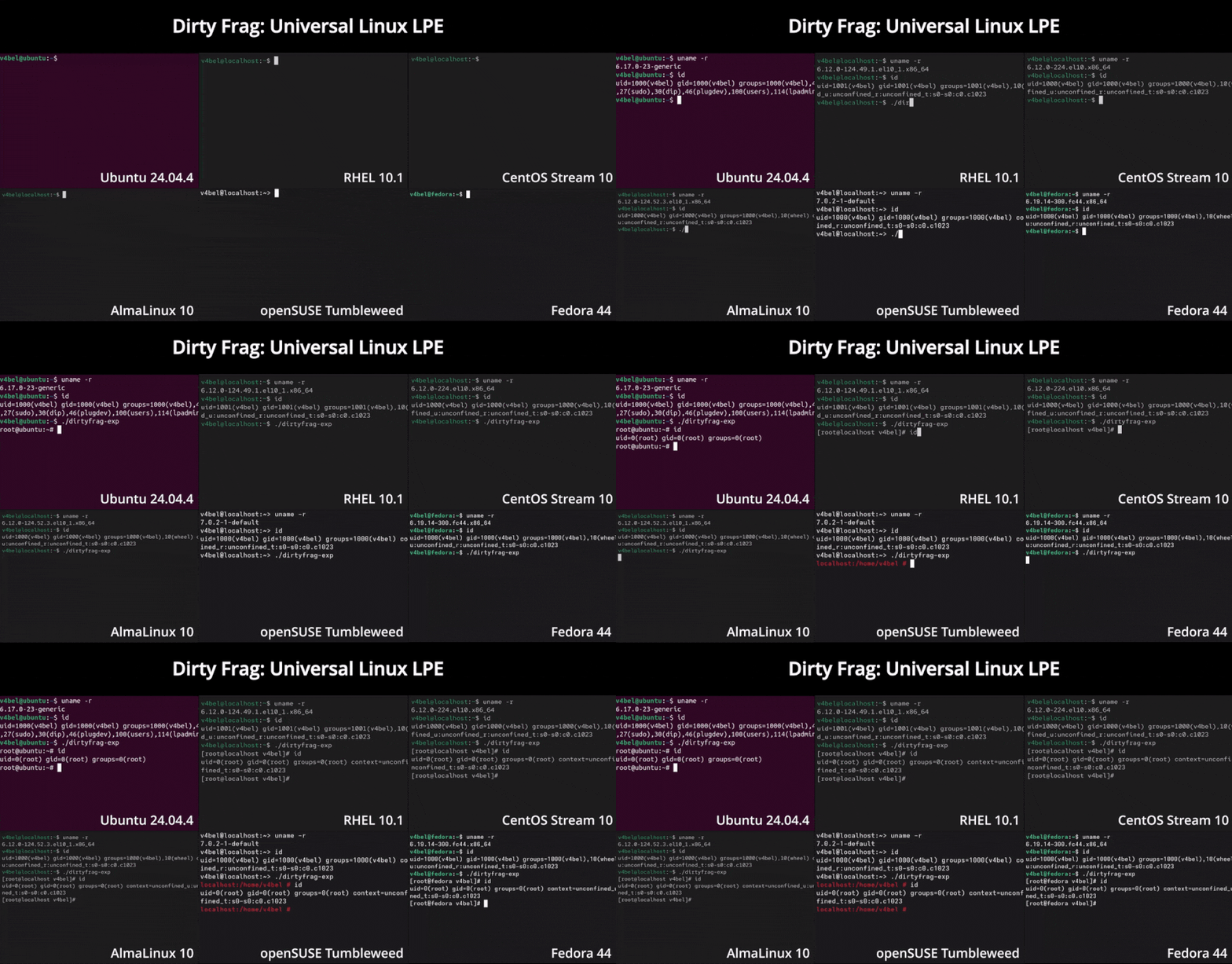
Details have emerged about a new, unpatched local privilege escalation (LPE) vulnerability impacting the Linux kernel. Dubbed Dirty Frag, it has been described as a successor to Copy Fail (CVE-2026-31431, CVSS score: 7.8), a recently disclosed LPE flaw impacting the Linux kernel that has since come under active exploitation in the wild. The vulnerability was reported to Linux kernel maintainers
Read More
Every AI tool, workflow automation, and productivity app your employees connected to Google or Microsoft this year left something behind: a persistent OAuth token with no expiration date, no automatic cleanup, and in most organizations, no one watching it. Your perimeter controls don’t see it. Your MFA doesn’t stop it. And when an attacker gets
Read More
Our mission is to educate our customer base, build capacity in every country we operate in and make cyber security affordable to all