
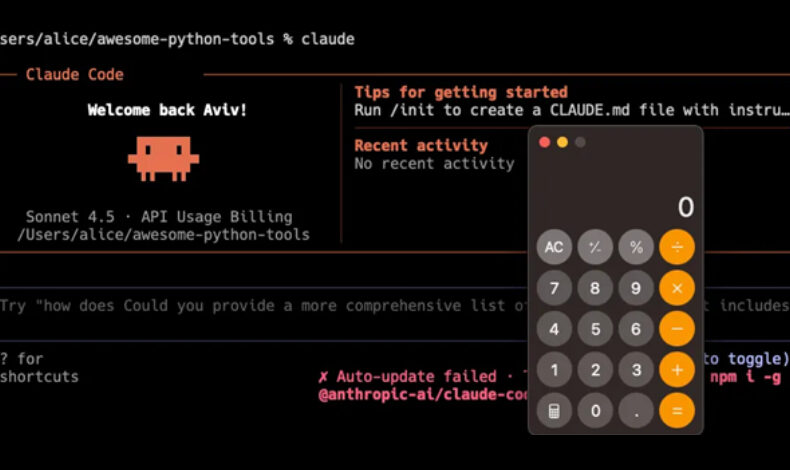
Cybersecurity researchers have disclosed multiple security vulnerabilities in Anthropic’s Claude Code, an artificial intelligence (AI)-powered coding assistant, that could result in remote code execution and theft of API credentials. “The vulnerabilities exploit various configuration mechanisms, including Hooks, Model Context Protocol (MCP) servers, and environment variables – executing arbitrary shell commands and exfiltrating Anthropic API keys when users
Read More
Google on Wednesday disclosed that it worked with industry partners to disrupt the infrastructure of a suspected China-nexus cyber espionage group tracked as UNC2814 that breached at least 53 organizations across 42 countries. “This prolific, elusive actor has a long history of targeting international governments and global telecommunications organizations across Africa, Asia, and the Americas,” Google Threat
Read More
A newly disclosed maximum-severity security flaw in Cisco Catalyst SD-WAN Controller (formerly vSmart) and Catalyst SD-WAN Manager (formerly vManage) has come under active exploitation in the wild as part of malicious activity that dates back to 2023. The vulnerability, tracked as CVE-2026-20127 (CVSS score: 10.0), allows an unauthenticated remote attacker to bypass authentication and obtain administrative privileges
Read More
Cybersecurity researchers have disclosed details of a new malicious package discovered on the NuGet Gallery, impersonating a library from financial services firm Stripe in an attempt to target the financial sector. The package, codenamed StripeApi.Net, attempts to masquerade as Stripe.net, a legitimate library from Stripe that has over 75 million downloads. It was uploaded by a
Read More
Our mission is to educate our customer base, build capacity in every country we operate in and make cyber security affordable to all