
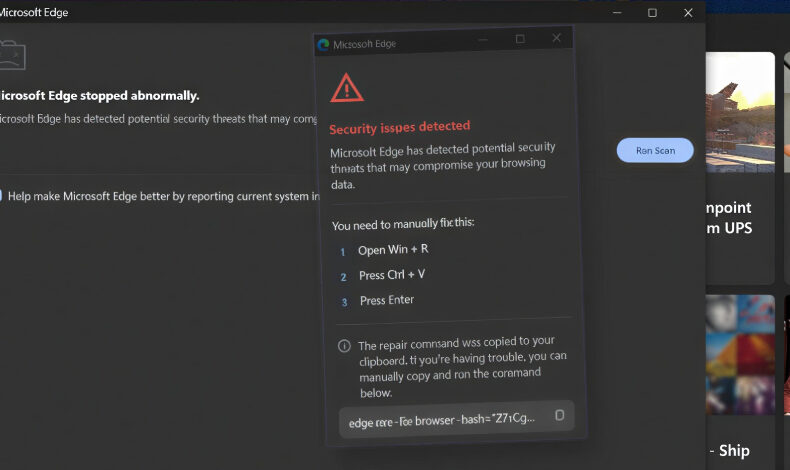
Cybersecurity researchers have disclosed details of an ongoing campaign dubbed KongTuke that used a malicious Google Chrome extension masquerading as an ad blocker to deliberately crash the web browser and trick victims into running arbitrary commands using ClickFix-like lures to deliver a previously undocumented remote access trojan (RAT) dubbed ModeloRAT. This new escalation of ClickFix, observed
Read More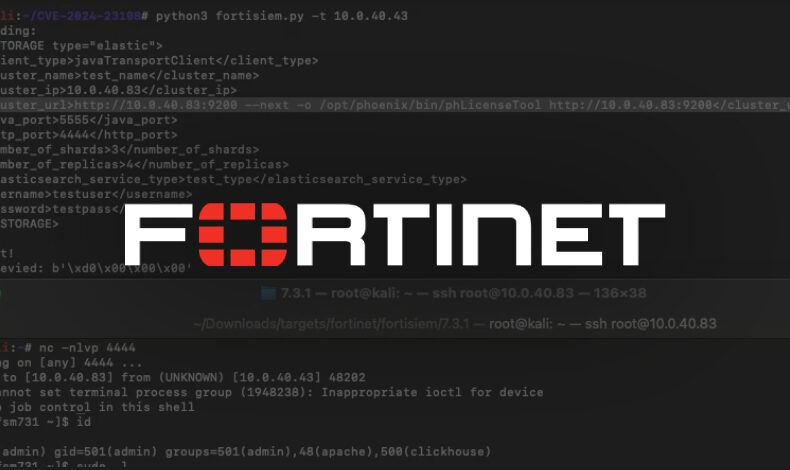
Fortinet has released updates to fix a critical security flaw impacting FortiSIEM that could allow an unauthenticated attacker to achieve code execution on susceptible instances. The operating system (OS) injection vulnerability, tracked as CVE-2025-64155, is rated 9.4 out of 10.0 on the CVSS scoring system. “An improper neutralization of special elements used in an OS command
Read More
Microsoft on Monday issued out-of-band security patches for a high-severity Microsoft Office zero-day vulnerability exploited in attacks. The vulnerability, tracked as CVE-2026-21509, carries a CVSS score of 7.8 out of 10.0. It has been described as a security feature bypass in Microsoft Office. “Reliance on untrusted inputs in a security decision in Microsoft Office allows an
Read More
A critical security flaw has been disclosed in Grist‑Core, an open-source, self-hosted version of the Grist relational spreadsheet-database, that could result in remote code execution. The vulnerability, tracked as CVE-2026-24002 (CVSS score: 9.1), has been codenamed Cellbreak by Cyera Research Labs. “One malicious formula can turn a spreadsheet into a Remote Code Execution (RCE) beachhead,” security researcher Vladimir Tokarev, who
Read More
Our mission is to educate our customer base, build capacity in every country we operate in and make cyber security affordable to all